FalconRoot Extermination provides diagnostic pest control services in San Antonio to secure residential perimeters against indigenous biological threats. Homeowners seeking professional pest control services near me receive targeted barrier applications formulated specifically for South Texas limestone substrates without long-term binding contracts.
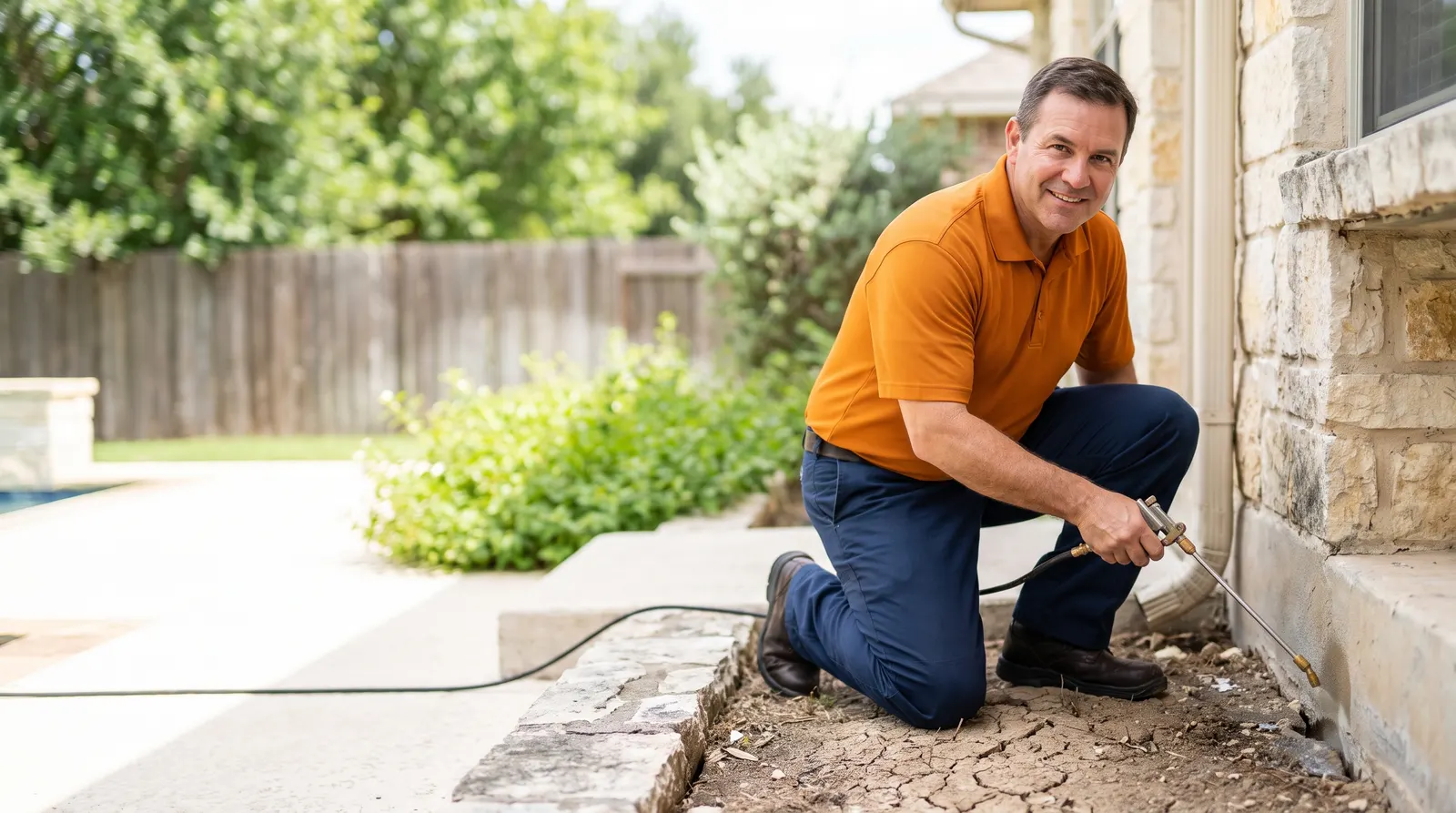
Pest control services company in San Antonio is an integrated pest management contractor that eliminates structural arthropods and rodents from residential and commercial foundations across Bexar County.
Every service reflects the same meticulous attention to detail, whether it's a single job or a larger pest control services project across San Antonio.
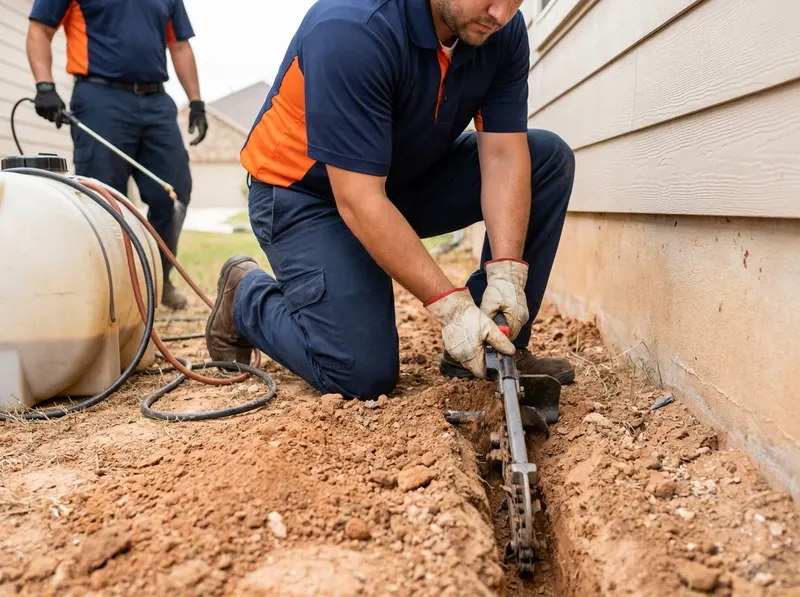
Liquid termiticide barrier applications require mechanical trenching four to six inches into native caliche soil along foundation footings to intercept subterranean termite colonies before workers compromise structural framing. In Bexar County, heavy clay soils shrink away from concrete slabs during dry summer months and expand dramatically during wet spring periods, creating subterranean fissures that allow eastern subterranean termites (*Reticulitermes flavipes*) and arid-land subterranean termites (*Reticulitermes tibialis*) direct access to framing timbers. Technicians apply non-repellent termiticides such as fipronil at precise label rates established by the Environmental Protection Agency , saturating the trench at four gallons per ten linear feet per foot of depth. When termites traverse this treated perimeter zone, they unknowingly ingest and transfer the active ingredient back to the central subterranean nursery via grooming behaviors, triggering complete colony mortality within sixty to ninety days without requiring invasive interior drilling through finished hardwood flooring or interior tile.
Get a quote →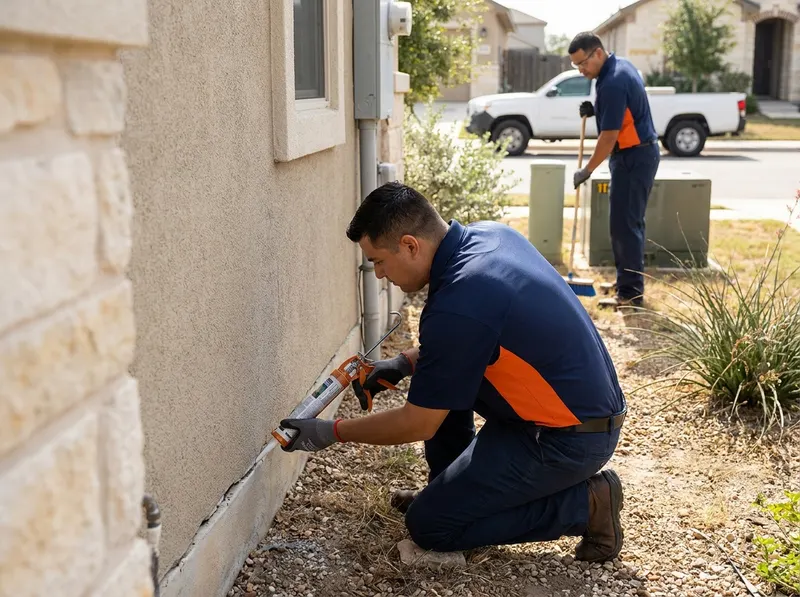
Microencapsulated synthetic pyrethroid applications applied ten feet out across turf surfaces and three feet up vertical masonry exteriors prevent striped bark scorpions (*Centruroides vittatus*) from navigating foundation expansion joints during extreme South Texas summer heat waves. Because scorpions possess thick, heavily sclerotized cuticles and elevate their bodies on long legs while walking, ordinary liquid surface sprays fail to deliver a lethal dose through brief contact. Our protocol utilizes suspended microscopic chemical capsules that physically adhere to the arachnid's legs and tarsi as it crosses rough limestone, brick, or stucco surfaces. In addition to chemical suppression, technicians mechanically seal exterior weep holes using non-corrosive woven copper mesh, pack gaps around exterior electrical service panels, and install heavy-duty brush sweeps beneath garage door thresholds, eliminating the structural entry gaps as narrow as one-sixteenth of an inch that these predatory arachnids exploit to hunt for crickets and roaches inside residential living quarters.
Get a quote →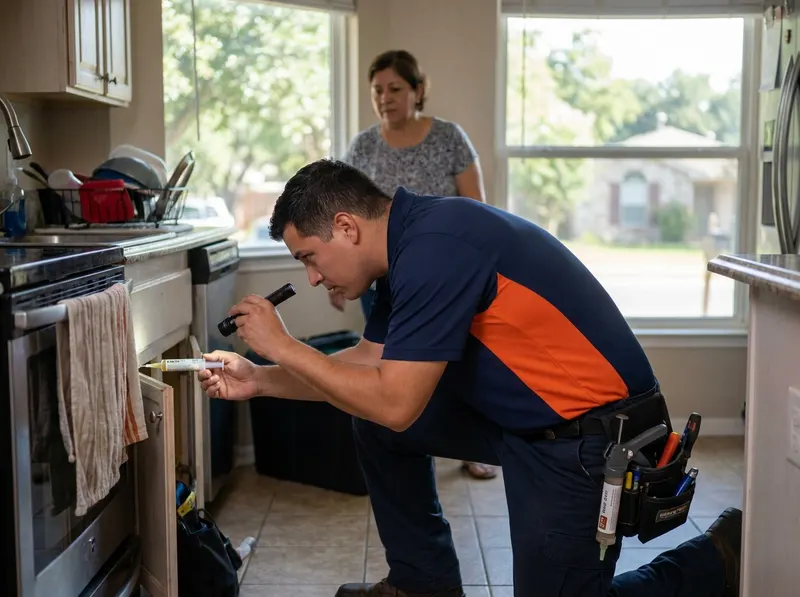
Indoor crack-and-crevice treatments utilize rotating active-ingredient bait gels and insect growth regulators to disrupt egg production cycles in kitchens and bathrooms without airborne chemical drift. German cockroaches (*Blattella germanica*) reproduce with extreme velocity, producing egg capsules containing up to forty nymphs every three to four weeks. Over-the-counter pyrethroid foggers frequently fail because they stimulate repellency, dispersing mated females into bedroom closets, hollow wall voids, and adjacent multi-family units. Our diagnostic protocol relies on micro-dot baiting using hydramethylnon, indoxacarb, and abamectin matrices strategically placed behind refrigerator compressor motors, underneath dishwasher basins, and inside cabinet hinge recesses in compliance with Centers for Disease Control and Prevention environmental health standards . Simultaneously, juvenile hormone mimics such as pyriproxyfen prevent juvenile instars from completing their final molt into reproductive adults, collapsing severe indoor infestations within twenty-one to thirty days without contaminating food preparation surfaces.
Get a quote →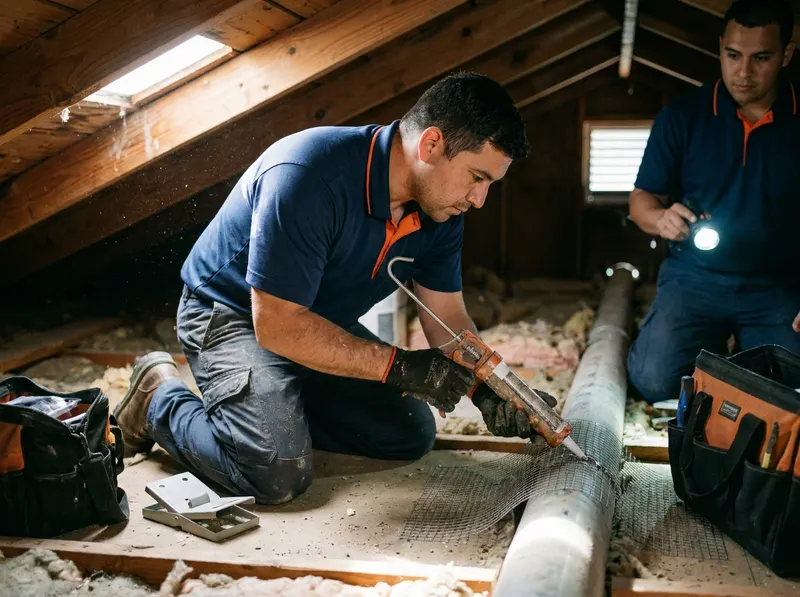
Mechanical sealing of gable louvers, soffit returns, and roof ridge vents with quarter-inch galvanized steel hardware cloth stops invasive roof rats (*Rattus rattus*) from nesting in residential fiberglass attic insulation. Roof rats are agile climbers that access residential structures across utility lines, masonry facades, and overhanging live oak branches. Once inside an attic space, rodents gnaw on polymer electrical wire insulation, creating hazardous fire risks, while compressing blown insulation and contaminating ceiling drywall with urine and fecal pathogens. Technicians execute clean, interior snap-trap suppression sequences within attic perimeters using tamper-resistant bait mechanisms placed along active structural travel runways. Concurrently, all exterior architectural roof-line gaps exceeding one-half inch are sealed with heavy-gauge wire mesh anchored with exterior-grade structural fasteners, preventing future rodent families from re-establishing residency when winter cold fronts move down through the Texas Hill Country.
Get a quote →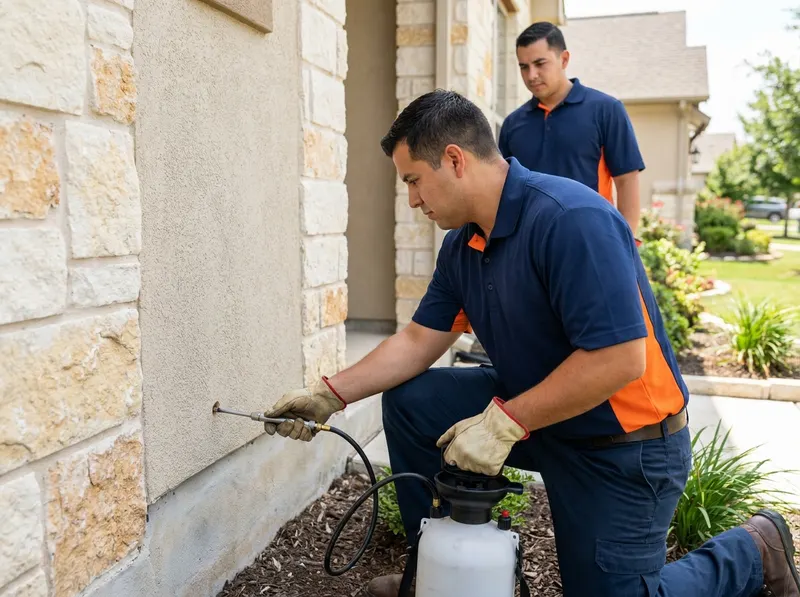
Non-repellent transfer-toxicant aerosols injected directly into wall framing voids target satellite carpenter ant (*Camponotus*) nests hollowed out behind plumbing access panels, exterior moisture points, and window flashings. Unlike termites, carpenter ants do not digest structural cellulose; instead, worker ants excavate smooth, sandpaper-like galleries within structural 2x4 framing to rear brood, depositing fine sawdust frass outside exit slits. Infestations in San Antonio often originate from mature oak trees harboring parent colonies that dispatch reproductive swarmers toward residential roof lines and weep holes. Technicians utilize specialized micro-injection tips inserted into discreet drywall penetrations and exterior weep screeds to introduce slow-acting biological toxicants. Foraging worker ants carry these undetectable residues into the central nesting gallery, sharing the formulation with the reproductive queen and juvenile larvae via trophallaxis to achieve complete colony elimination without the need for extensive interior drywall removal.
Get a quote →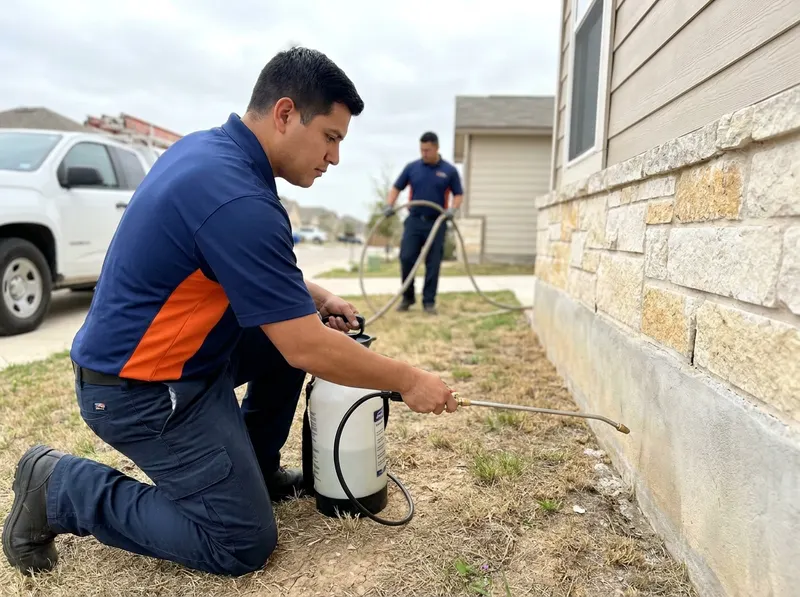
Suspension concentrate perimeter barriers applied directly to exterior foundation slabs eliminate sewer-emergent American roaches (*Periplaneta americana*) seeking indoor harborage during seasonal temperature swings. Commonly referred to locally as palmetto bugs or sewer roaches, these large peridomestic insects thrive in San Antonio's expansive municipal storm sewer systems and exterior landscape mulch beds. When ambient surface temperatures surpass 100 degrees Fahrenheit in mid-summer or plunge during sudden autumn cold fronts, roaches follow plumbing lines upward, entering homes through dry p-traps, unsealed foundation pipe penetrations, and loose bath traps. Our treatment combines residual perimeter insecticides with granular biological baits applied to surrounding mulch zones and dense groundcover. Technicians inspect and advise on interior plumbing seals, treating crawlspaces and sub-slab voids to establish a dual-action defensive perimeter that eliminates roaches outside before they venture into residential living areas.
Get a quote →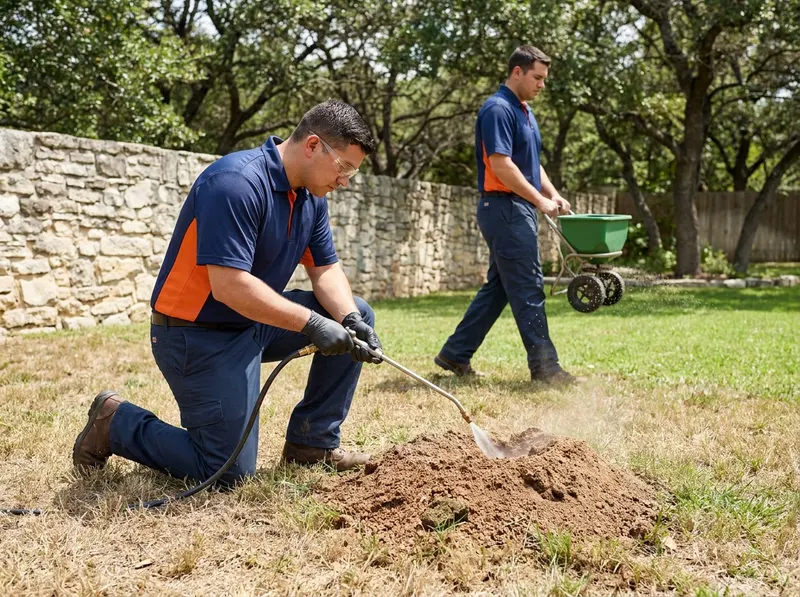
Granular hydramethylnon broadcast baits combined with targeted individual mound drenching neutralize aggressive red imported fire ant (*Solenopsis invicta*) colonies across expansive lawn surfaces and landscape beds. Fire ants present significant medical and structural risks across Bexar County, inflicting painful venomous stings on domestic pets and small children while building massive underground nests that can short out electrical air conditioning contactors and irrigation control valves. Simple top-dressing with hardware store granules often triggers satellite colony budding, causing a single disturbed mound to divide into five or six distinct satellite colonies. Our protocol utilizes calibrated hydraulic broadcast spreaders to distribute extremely low-dose insect growth regulators across entire turf expanses, allowing foraging workers to carry the bait directly to subterranean queens. Active mounds threatening walkways, patios, or foundation perimeters are drenched under low pressure using liquid pyrethroid solutions to provide immediate contact kill without scattering satellite colonies.
Get a quote →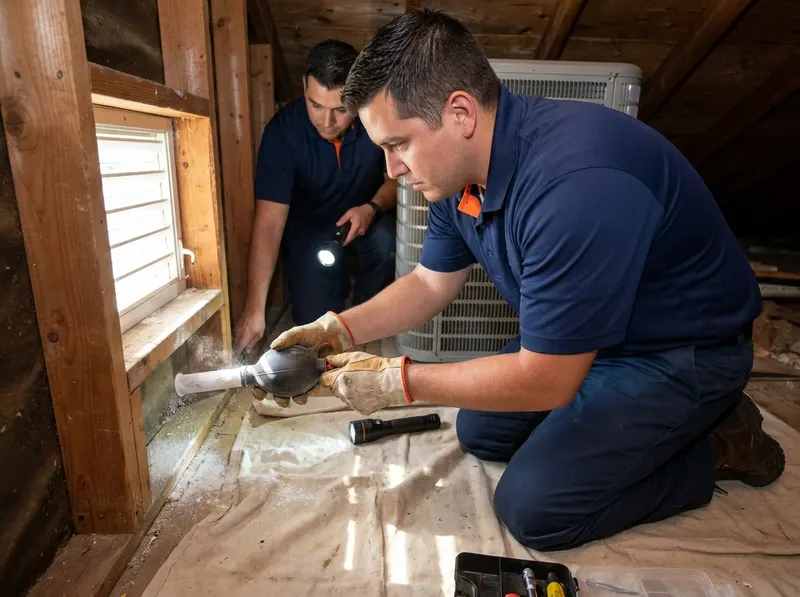
Inorganic silica dust applied to crawlspaces, pipe chases, and drop-ceiling voids adheres directly to arachnid cuticles, desiccating hidden brown recluse (*Loxosceles reclusa*) and black widow (*Latrodectus mactans*) populations without leaving hazardous baseboard residues. Spiders dwell in quiet, undisturbed voids such as structural basements, suspended ceilings, attic eaves, and mechanical equipment chases where liquid sprays rarely penetrate effectively. Amorphous silica aerogel operates through a purely physical mechanical mode of action: the microscopic particles absorb the protective waxy epicuticle layer from the spider's exoskeleton, causing rapid dehydration and death within twenty-four to forty-eight hours of contact. Because this inorganic compound does not rely on synthetic neurotoxins, it does not degrade under elevated attic temperatures and provides years of continuous residual protection against venomous spiders when kept completely dry inside structural wall and ceiling voids.
Get a quote →You get a firm, itemized quote for your pest control services before any work begins, no surprises, no pressure.
Careful prep, tidy work, and a full cleanup when we are done. We treat your home and belongings like our own.
The same trusted, background-checked team from the first call to the final check.
If dealing with visible mud shelter tubes along a concrete slab edge or pinhole perforations across interior sheetrock, select liquid non-repellent termiticide perimeter trenching formulated to bind with heavy regional clays rather than surface repellant sprays that merely scatter foraging insects. If observing nocturnal striped bark scorpions clinging to interior sheetrock or navigating perimeter baseboards, select microencapsulated synthetic pyrethroid perimeter barriers paired with exterior copper mesh weep-hole exclusion. The trade-off centers on application surface chemistry versus mechanical sealing labor: liquid termiticide bonds strictly to deep soil substrates around foundation footings to intercept subterranean termite colonies before workers compromise structural framing, whereas microencapsulated pyrethroids adhere effectively to dry porous limestone masonry but require rigorous manual sealing of weep holes, door sweeps, and pipe penetrations to prevent physical entry.
For food-handling areas infested with German cockroaches, bait matrix rotations utilizing insect growth regulators provide definitive colony elimination, whereas attempting exterior repellant sprays alone causes localized indoor population budding and scatters breeding females deeper into wall framing voids. For persistent rodent ingress in multi-level residential structures, mechanical exclusion targeting roof returns and ridge vents using heavy-gauge galvanized steel mesh provides permanent physical defense, whereas relying solely on anticoagulant exterior bait stations leaves attic insulation vulnerable to continual seasonal recolonization from overhead tree branches. Selecting between spot treatments and comprehensive perimeter barriers depends directly on structural vulnerability: modern monolithic concrete slabs in master-planned communities benefit from continuous exterior perimeter chemical bands that neutralize foraging arthropods before they cross the weep line, while historic pier-and-beam homes require sub-floor crawlspace soil treatments, moisture abatement protocols, and targeted sill-plate injections to address carpenter ants and wood-boring beetles drawn to elevated humidity levels beneath the subfloor envelope.
Every project gets a firm, written price after a free on-site visit. Ranges below for orientation.
Tell us about your pest control services job and we'll send a clear, written quote, usually the same day. Or just call and talk to a real San Antonio pro.
(281) 270-1637
The unique geology of the Edwards Aquifer recharge zone across northern Bexar County creates expansive karst limestone fractures and porous caliche topsoils that provide natural subsurface harborage for striped bark scorpions, centipedes, and subterranean termites. In suburban communities like Stone Oak and the Dominion, residential construction directly atop fractured limestone rock shelves disturbs native subterranean ecosystems, forcing predatory arachnids toward foundation slabs where irrigation systems and air conditioning condensation lines offer critical hydration. During the scorching summer months from June through August, when surface temperatures consistently surpass 98 degrees Fahrenheit, scorpions and American roaches ascend structural concrete footings, entering through weep holes in brick and stone facades. Along riparian creek corridors running through Brackenridge Park, the San Antonio River Walk, and Helotes Creek, mature live oak, pecan, and hackberry canopies support extensive native roof rat populations. These rodents utilize overhanging branches to bypass ground-level physical perimeters, accessing residential roof decks, unsealed gable vents, and attic insulation. Conversely, older central neighborhoods like the King William Historic District and Monte Vista feature early twentieth-century pier-and-beam foundations with damp subfloor crawlspaces. The elevated relative humidity beneath these historic structures fosters wood-rot fungi and creates optimal microclimates for destructive carpenter ant satellite colonies and subterranean termites. Effective management across these disparate San Antonio environments demands an understanding of soil chemistry, construction architecture, and micro-climates rather than uniform chemical applications.
Free estimates for San Antonio & the surrounding area.
For standards, safe disposal, and service guidance on pest control services in San Antonio, TX, useful references include U.S. EPA, ENERGY STAR, U.S. Dept. of Energy, Consumer.gov, U.S. Census Bureau, and Google Maps. General consumer and small-business resources are available from USA.gov, Better Business Bureau, FTC Consumer Advice, U.S. Small Business Administration, and Ready.gov.
 FalconRoot Extermination