Residential flea and tick control in Bexar County requires addressing the distinct biology of species thriving in regional alkaline conditions. In neighborhoods like Stone Oak and The Dominion, properties built over…
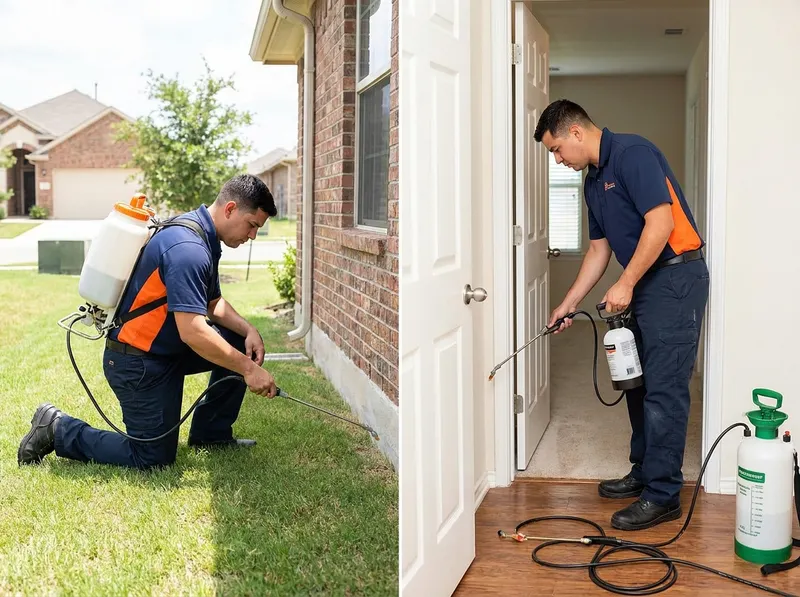
Residential flea and tick control in Bexar County requires addressing the distinct biology of species thriving in regional alkaline conditions. In neighborhoods like Stone Oak and The Dominion, properties built over thin topsoils and fractured Edwards limestone feature hardscapes and native live oaks where lone star ticks latch onto transient wildlife. Brown dog ticks adapt to micro-crevices inside residential structures, surviving behind baseboards in historic pier-and-beam foundations throughout the King William Historic District and Monte Vista. Successful suppression demands synchronized exterior and interior remediation; treating only indoor carpet allows pupae sheltered outdoors to continuously repopulate the home, while treating only exterior acreage leaves emerging indoor adults free to host on domestic animals.
Outdoor abatement focuses on environmental harborages along fence lines, moist soil pockets beneath low-canopy brush, and shaded landscape beds across Alamo Heights, Oakland Estates, and Helotes Creek. Liquid residual applications incorporate an insect growth regulator like pyriproxyfen paired with synthetic pyrethroids such as bifenthrin to eliminate active biters while sterilizing unhatched eggs. Ground-level applications follow guidelines established by the Texas A&M AgriLife Extension Service for managing domestic vector pests, avoiding broad-spectrum chemical dumping across unshaded turf where high surface temperatures naturally suppress flea larvae. For properties bordering open greenbelts near the Medical Center or Southtown, technicians establish continuous chemical barriers extending 3 feet up structural foundations and 10 feet out into surrounding mulch beds.
Indoor protocols require strict spatial coordination. Technicians apply non-staining adulticide formulations combined with juvenile hormone mimics using low-pressure broad-fan nozzles directly to sub-flooring, beneath furniture cushions, along sub-rug perimeters, and inside kennel runs. Under regulatory standards enforced by the Texas Department of Agriculture Structural Pest Control Service, treatment compounds dry completely within 2 to 4 hours before residents and companion animals re-enter the treated envelope. Homeowners must avoid wet-mopping hard floors or steam-cleaning treated carpets for a minimum of 14 days post-application to preserve the residual barrier, as mechanical agitation from regular dry vacuuming stimulates dormant flea pupae to emerge from their silk cocoons and contact the chemical deposits.
Targeted chemical distribution is governed by the biological constraints of ectoparasite growth cycles rather than arbitrary calendar applications. Because flea pupae encased in debris-coated cocoons remain impervious to chemical penetration, adult fleas may continue to emerge for 10 to 21 days following initial application. The lingering growth regulator compound disrupts chitin formation, preventing these newly emerged adults from depositing viable eggs. Properties facing heavy infestations along wildlife travel corridors, such as creek drainages near Helotes or native brush surrounding northern Bexar County estates, require a second inspection window at the 14-day mark to verify that second-wave emergence has completely stalled.
Every job gets a firm, written price after a free on-site visit.
For standards, safe disposal, and service guidance on pest control services in San Antonio, TX, useful references include U.S. EPA, ENERGY STAR, U.S. Dept. of Energy, Consumer.gov, U.S. Census Bureau, and Google Maps. General consumer and small-business resources are available from USA.gov, Better Business Bureau, FTC Consumer Advice, U.S. Small Business Administration, and Ready.gov.
Tell us about your fleas and ticks lawn and interior abatement job in San Antonio and we'll send a clear, written quote, usually the same day.
 FalconRoot Extermination