Targeted bed bug eradication balances thermal air circulation with chemical persistence to counter resistant strains documented by the Centers for Disease Control and Prevention . Thermal remediation introduces…
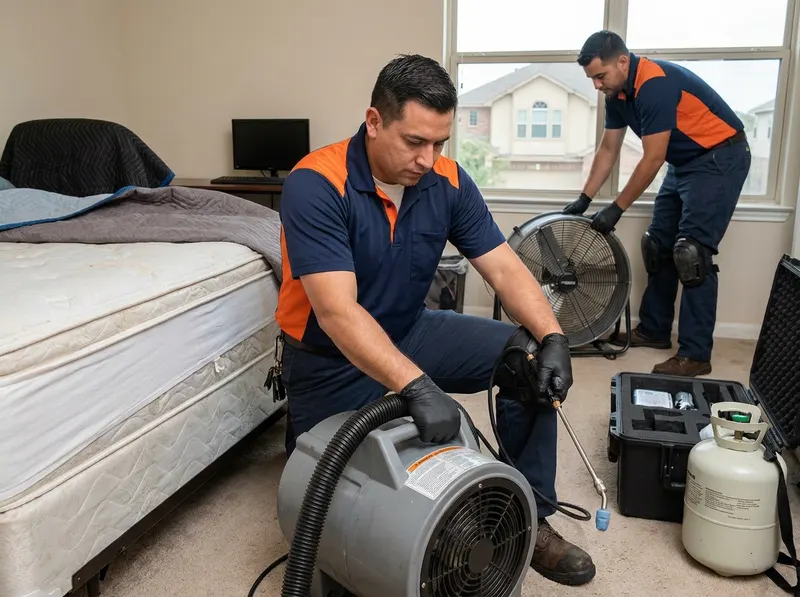
Targeted bed bug eradication balances thermal air circulation with chemical persistence to counter resistant strains documented by the Centers for Disease Control and Prevention. Thermal remediation introduces specialized industrial heating units that elevate ambient structural temperatures to an exact range between 120°F and 135°F. Maintaining lethal temperatures for a minimum of 4 hours denatures the cellular proteins of adult insects, emerging nymphs, and unhatched eggs without structural dismantling. Technicians monitor heat distribution through infrared thermography across every structural surface, referencing thermodynamic standards outlined by the National Institute of Standards and Technology to eliminate cold spots behind trim moldings or under carpet tacks.
While convective heat penetrates deep into upholstery, mattress cores, and deep frame joints, chemical spot applications establish a protective residual barrier. In accordance with guidelines from the United States Environmental Protection Agency, technicians apply botanical desiccants such as amorphous silica gel along interior utility penetrations, backed by microencapsulated formulations along carpet tack strips. In Bexar County multi-family units and historic wood-frame homes in Monte Vista, King William Historic District, and Southtown, bed bugs frequently retreat into wall voids through pipe chases and hollow framing. Combining heat convection with non-repellent chemical barriers ensures insects attempting to evacuate thermal boundaries encounter lethal residual zones.
1. Initial structural diagnostics map insect harborage points using visual inspection protocols from the Pest Control Technology Technical Resource Center.
2. Inhabitant preparation requires removing meltable items, electronics, and aerosol canisters, adhering to structural clearance checklists supported by the Texas A&M AgriLife Extension Service.
3. Electric or indirect-fired heaters elevate interior airspace, circulating forced air using high-static axial fans while thermal probes log ambient conditions.
4. Precision crack-and-crevice residual treatments occur along baseboards, door frames, and electrical box voids pursuant to regulations enforced by the Texas Department of Agriculture.
5. Post-treatment cool-down and inspection confirm structural temperatures return to normal before occupants safely re-enter the property.
Properties throughout northern neighborhoods like Stone Oak, Dominion, and Helotes Creek often feature high-ceiling floor plans that require specialized high-capacity airflow routing to prevent heat dissipation. Conversely, mid-century properties in Alamo Heights and slab-on-grade tract homes around Medical Center and Oakland Estates benefit from focused perimeter chemical barriers where concrete expansion joints meet drywall partitions. The structural trade-off between thermal-only and dual-method eradication involves short-term downtime versus long-term reinfection risk: heat provides immediate total kill across open rooms, while residual chemical placement prevents reintroduction from adjacent walls or luggage without locking property owners into extended service programs.
Every job gets a firm, written price after a free on-site visit.
For standards, safe disposal, and service guidance on pest control services in San Antonio, TX, useful references include U.S. EPA, ENERGY STAR, U.S. Dept. of Energy, Consumer.gov, U.S. Census Bureau, and Google Maps. General consumer and small-business resources are available from USA.gov, Better Business Bureau, FTC Consumer Advice, U.S. Small Business Administration, and Ready.gov.
Tell us about your bed bug thermal and chemical eradication job in San Antonio and we'll send a clear, written quote, usually the same day.
 FalconRoot Extermination